
Ultherapy vs Thermage:
What Is the Difference?
Comparing Ultherapy vs Thermage? Both use heat to stimulate collagen, but they use different types of energy and act on different layers of the face. Neither is better in every case. The right choice depends on your concerns and on an examination of your face.
A dermatologist in Gangnam, Seoul explains the differences between Ultherapy and Thermage.
English consultations available
Same goal, different energy
In short: Ultherapy is mainly considered for lifting deeper layers, and Thermage for tightening the dermis more broadly.
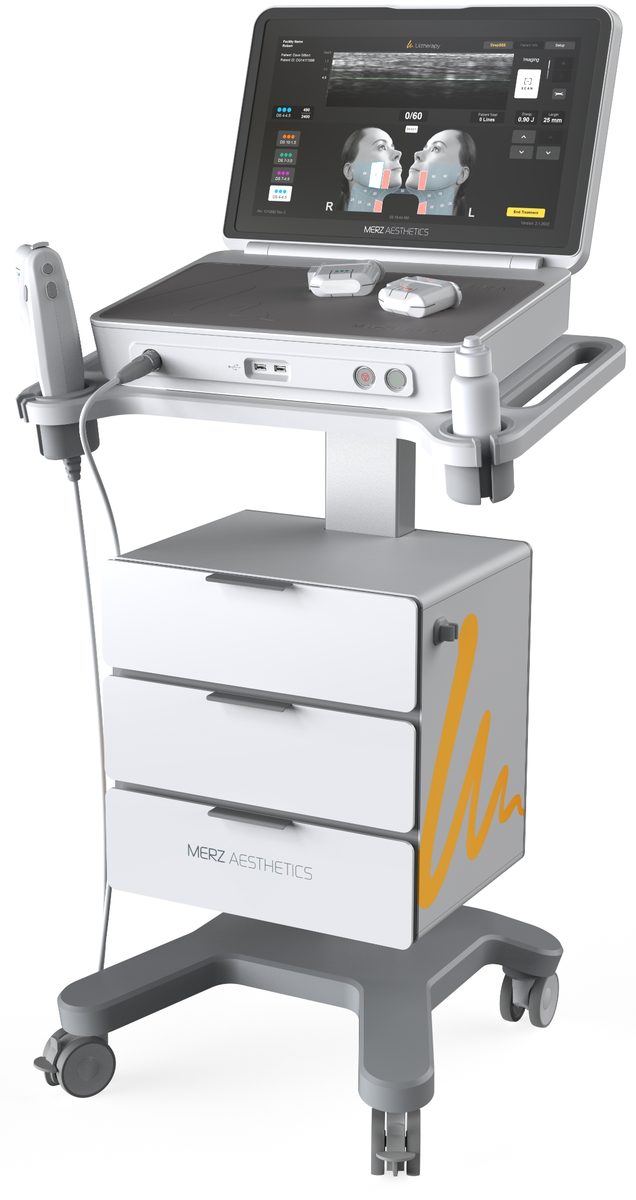
Focused points at chosen depths
- Energy: microfocused ultrasound, delivered as points.
- Depth: 1.5, 3.0 or 4.5 mm, chosen according to the goal of treatment.
- Strength: with the 4.5 mm tip, energy can reach the SMAS (the fascial layer), depending on individual anatomy, and is used to address sagging and improve facial contours.
Broader heating of the dermis
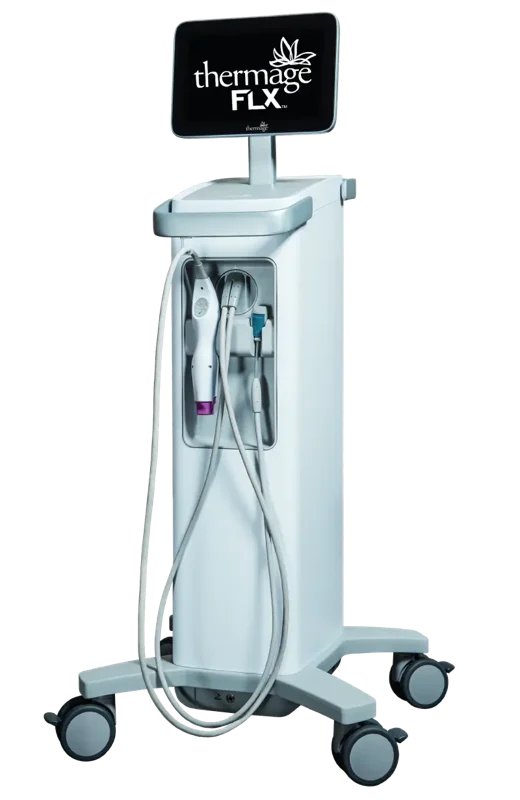
- Energy: radiofrequency that heats the tissue to stimulate collagen regeneration.
- Where it acts: the dermis and the connective tissue just beneath it.
- Strength: the skin surface is protected by cooling while the deeper skin is heated, to improve texture and firmness.

Which treatment fits which concern?
If lifting sagging contours is the priority, we consider Ultherapy. If improving skin firmness, fine lines and texture is the priority, we consider Thermage. Many faces have both concerns, so this is a starting point rather than a rule.
- Lifting: pulling sagging skin upward.
- Double-chin look: when loose skin under the chin makes it look heavier.
- Facial contour: when the V-line has softened and the jawline is less defined.
- After contouring surgery: when sagging after facial contouring or jaw surgery bothers you.
- Skin firmness: skin that feels less firm or elastic.
- Pores and fine lines: fine lines around the eyes and mouth, and shallow nasolabial folds.
- Skin texture: enlarged pores and dull-looking skin.
- Preventive care: for those who want to start looking after skin firmness early, before sagging becomes noticeable.
Ultherapy vs Thermage: key differences at a glance
| Ultherapy | Thermage | |
|---|---|---|
| Energy | Microfocused ultrasound | Radiofrequency |
| How it acts | Energy focused at specific depths, forming small heat points | Heat delivered broadly, mainly through the dermis |
| Mainly considered for | Lifting sagging lines | Tightening skin and improving firmness |
| When changes appear | Gradually, from about 2–3 months as collagen regenerates | Some temporary tightening right after treatment, then collagen improvement over about 2–6 months |
| Maintenance | Both are usually repeated about every 6–12 months, depending on your skin and goals. We do not apply the same interval to everyone. | |
The timing and degree of improvement vary from person to person.
Does it hurt? How long is recovery?
Pain varies a great deal between individuals. With Ultherapy you may feel a brief, throbbing sensation when energy reaches the deeper layers. With Thermage you may feel heat as the dermis is warmed.
The anesthesia method is decided at your consultation, according to your pain tolerance and the treatment plan.
Swelling and recovery
Ultherapy: swelling and tenderness can occur and, in some cases, last for 1–2 weeks.
Thermage: warmth, swelling and redness usually settle within a few days.
Recovery speed varies with your skin and the area treated.
What side effects should I know about?
Both treatments can cause temporary redness, swelling, tenderness and changes in sensation. These usually settle within days to 1–2 weeks. The less common reactions differ because the energy and the tissues affected differ.
- Loss of fat, which can show as hollowing of the cheeks.
- Temporary sensory or muscle-related symptoms near the paths of nerves.
- Small blisters or burns.
- Skin injury caused by excessive heat.
Using a genuine device is only one factor in safety. The risk is managed by the doctor’s overall judgement: whether treatment is appropriate for you, the anatomy of the area including nerves and blood vessels, the depth and energy chosen for each area, and keeping the treatment range moderate.
Can I have Ultherapy and Thermage together?
Yes, and in some cases it is helpful. Ultherapy targets deeper tissue layers, while Thermage delivers radiofrequency energy to support skin tightening, so the two act on different layers.
It is not the right answer for everyone. If sagging is the main concern we place more weight on Ultherapy, and if skin texture and fine lines are the main concern we place more weight on Thermage. Sometimes one treatment is enough. If both are done at the same visit, we usually begin with Ultherapy, although that is not the only appropriate order. The balance and order are decided after an examination.
For deeper questions on Ultherapy, see Ultherapy PRIME in Gangnam, Seoul.
Ultherapy vs Thermage: questions
What is the biggest difference between Ultherapy and Thermage?
Ultherapy uses ultrasound to reach deeper layers; with the 4.5 mm tip it can reach the SMAS (the fascial layer), depending on individual anatomy, and is used to address sagging and improve facial contours. Thermage uses radiofrequency to heat the dermis broadly and is used to support skin tightening and firmness. In short, Ultherapy is about lifting deeper layers and Thermage is about tightening the dermis.
Thermage vs Ultherapy: which is better?
Neither is better in every case. If deeper sagging is the concern, we lean toward Ultherapy. If reduced skin firmness or fine lines are the concern, we lean toward Thermage. The right choice is made after examining your face.
Which one hurts more, and what about anesthesia?
Pain varies a great deal between individuals. Ultherapy can cause a brief throbbing sensation as energy reaches the deeper layers, and Thermage can feel hot as the dermis is warmed. The anesthesia method is decided at your consultation according to your pain tolerance and treatment plan.
Is recovery different for each treatment?
Ultherapy can cause swelling or tenderness that, in some cases, lasts 1–2 weeks. With Thermage, warmth, swelling and redness usually settle within a few days. Recovery speed varies with your skin.
Can I have Ultherapy and Thermage together?
In some cases, yes, and it can be helpful. It is not right for everyone: depending on whether sagging or skin texture and firmness is the main concern, one treatment alone may be enough. The balance and order are decided after an examination.
How much do Ultherapy and Thermage cost?
The cost depends on the treatment area and range, the number of shots, the tip type and the anesthesia method. Ultherapy and Thermage work differently, so a simple price comparison between them is hard to make. The range you need is decided after an examination, so we do not list a single fixed price on this page. To ask about pricing for your visit, message us on WhatsApp or KakaoTalk.
How often should I repeat Ultherapy or Thermage?
Many patients repeat treatment about every 6–12 months for maintenance. The timing depends on how much change you notice, how your skin is ageing, and the areas and range treated before. At a repeat consultation we review the timing and range of your previous treatment, your current sagging and firmness, and the thickness of your fat layer. Results and how long they last vary between individuals.
One-on-one appointments · Your doctor personally handles every step, from consultation to treatment.
Not sure which one suits you?
Ask us about appointment availability or planning your visit to Seoul.